THE STORY OF
Raicilla
Jalisco's mountain spirit — centuries of clandestine craft, now a protected denomination.
Origins & Ancient Roots
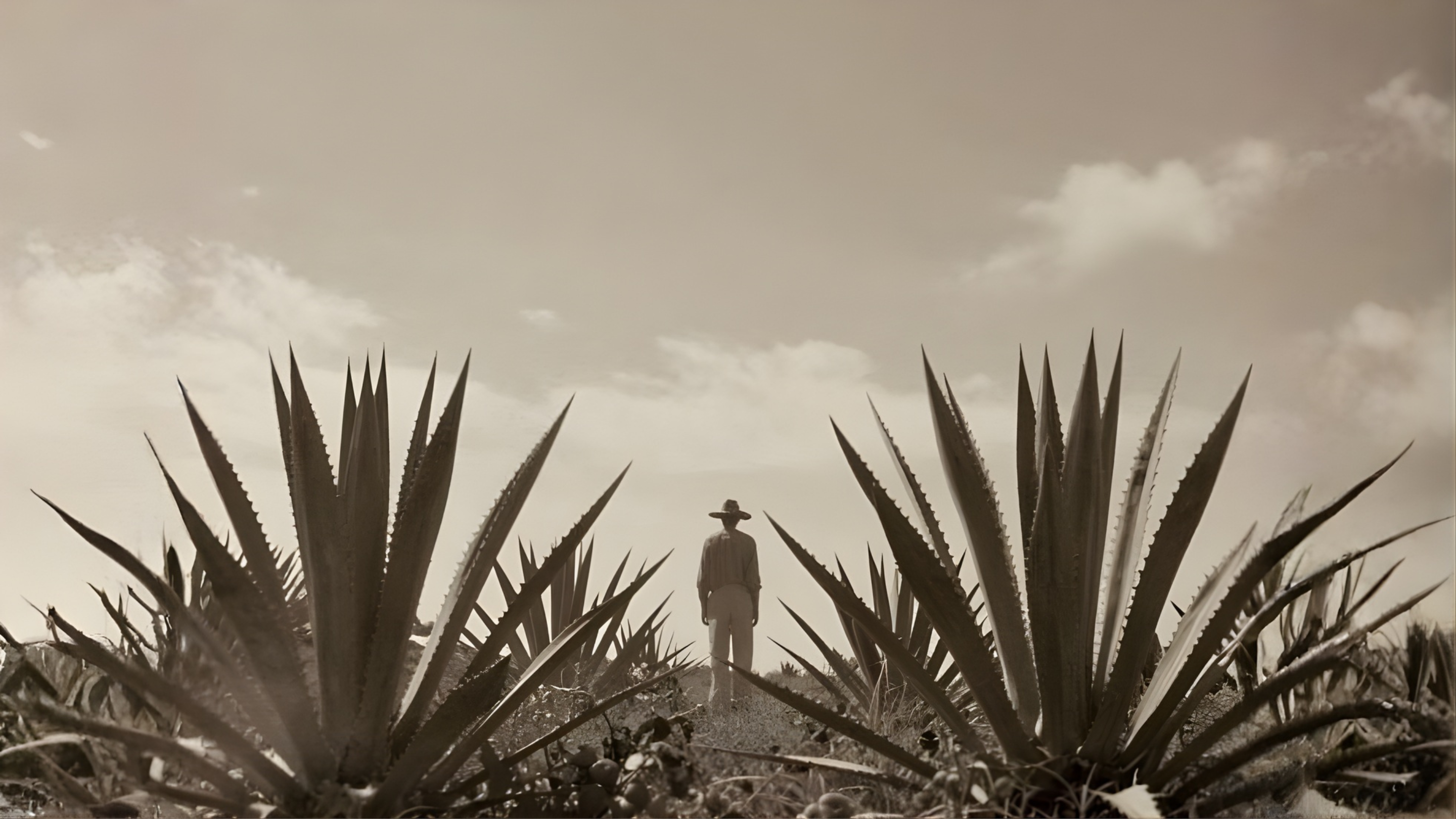
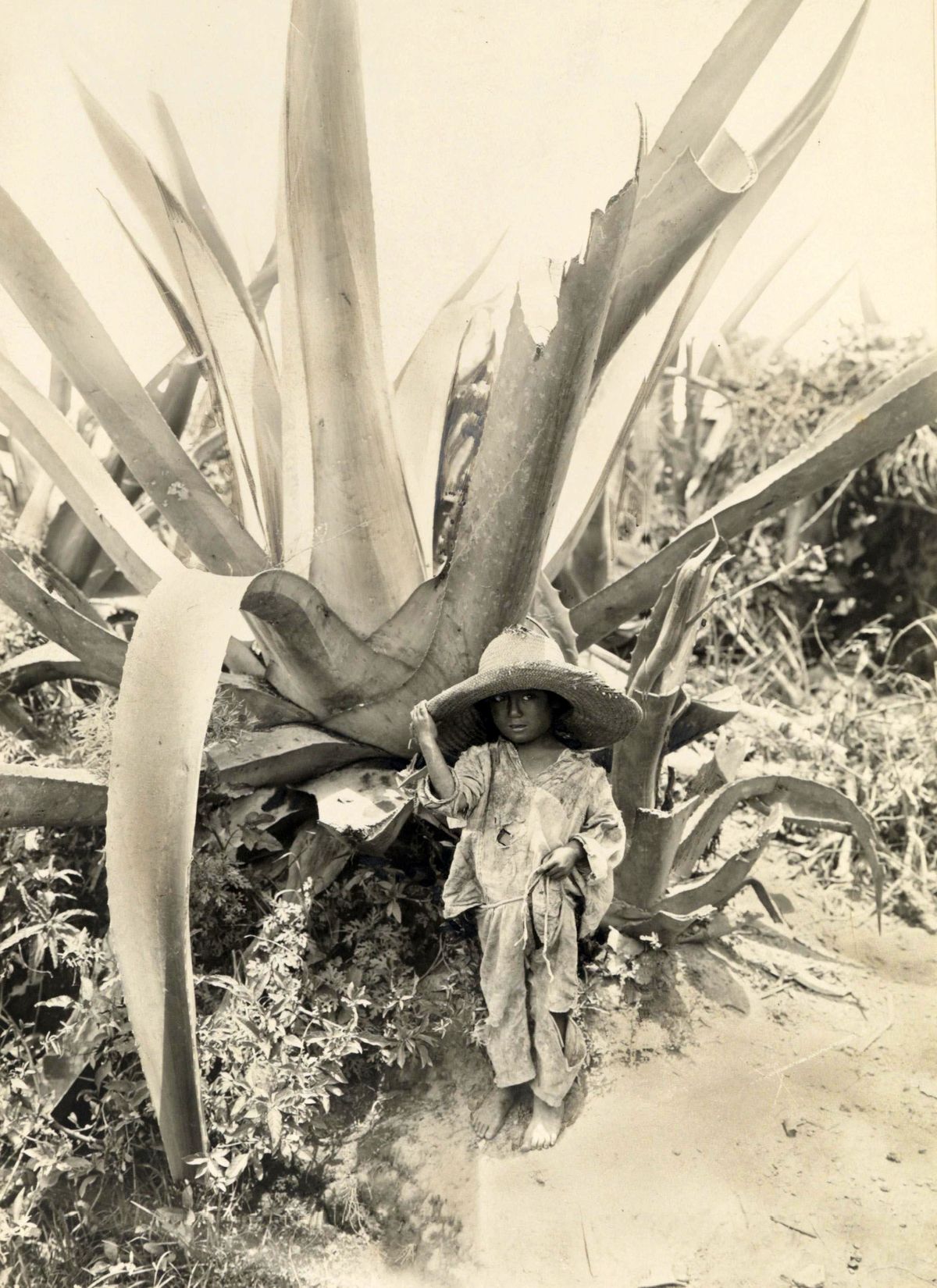
Raicilla is the spirit that refused to disappear. For centuries, it was produced in the remote mountains and coastal villages of Jalisco, outside the boundaries of tequila's Denomination of Origin and beyond the reach of regulatory oversight. Its origins trace to the earliest days of Spanish colonization, when indigenous communities adapted European distillation to their local agave species — Maximiliana in the sierra, Angustifolia along the coast — creating a spirit entirely distinct from its more famous cousin.
The name 'raicilla' itself is shrouded in legend. One account suggests that producers deliberately mislabeled their spirit to avoid colonial taxes on mezcal and tequila, calling it a 'little root' extract (raicilla) to classify it as a medicinal product rather than a taxable liquor. Whether apocryphal or true, this story captures Raicilla's essential character: a spirit born of ingenuity, independence, and quiet defiance of centralized authority.
Raicilla survived not because of institutions, but in spite of them — carried forward by families who distilled in silence for generations.
At a Glance
DO Recognition
2019
Protected States
Jalisco + Nayarit
Primary Agave
Maximiliana (Sierra) · Angustifolia (Costa)
Sub-Regions
4
Production Process
Harvesting
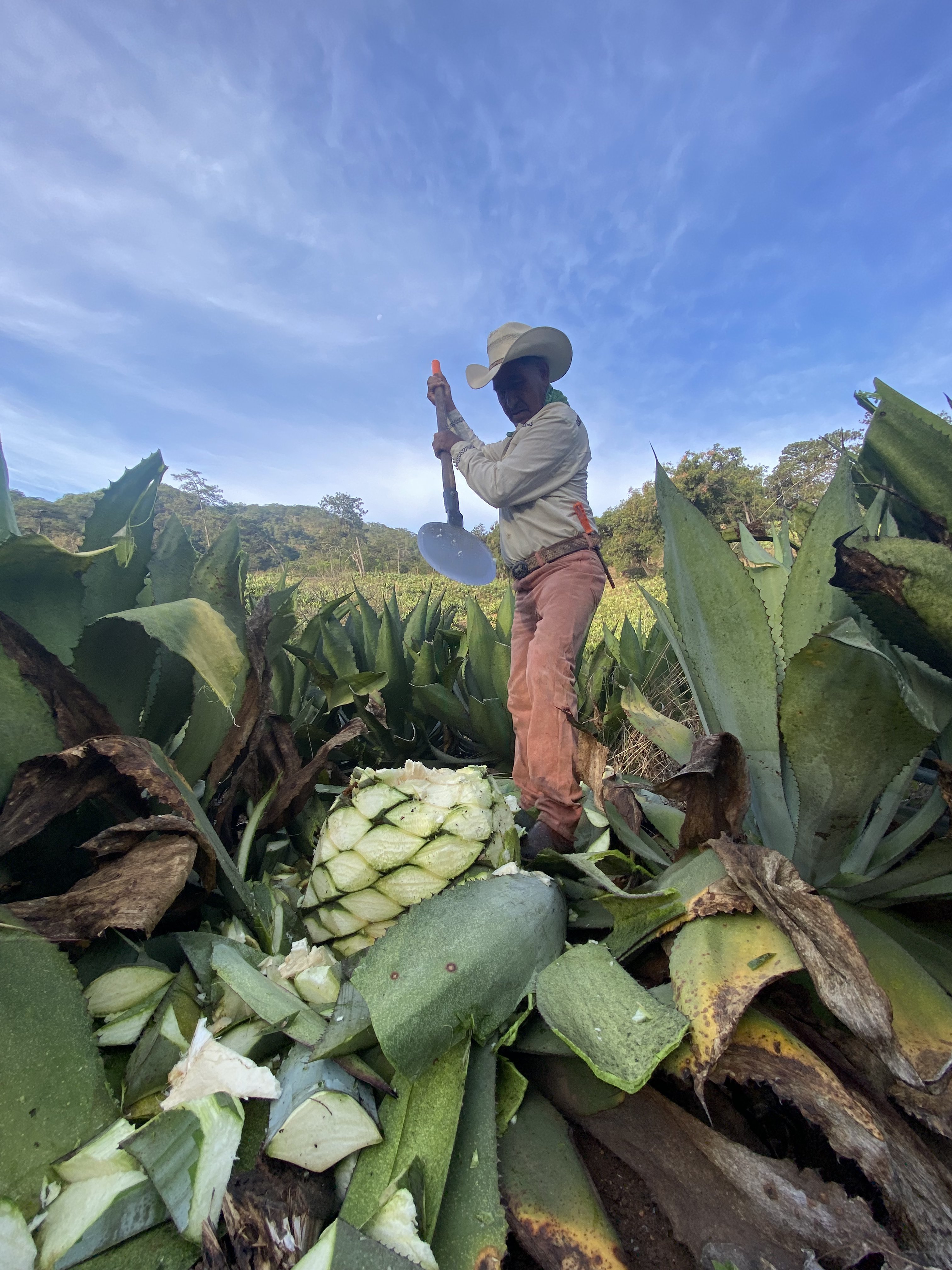
Wild or cultivated agave is harvested by hand from steep mountain terrain or coastal hillsides. Sierra varieties — Maximiliana, Inaequidens, and Valenciana — and coastal varieties — Rhodacantha and Angustifolia — each shape the spirit's character. Wild agave takes significantly longer to mature than cultivated plants.
Cooking
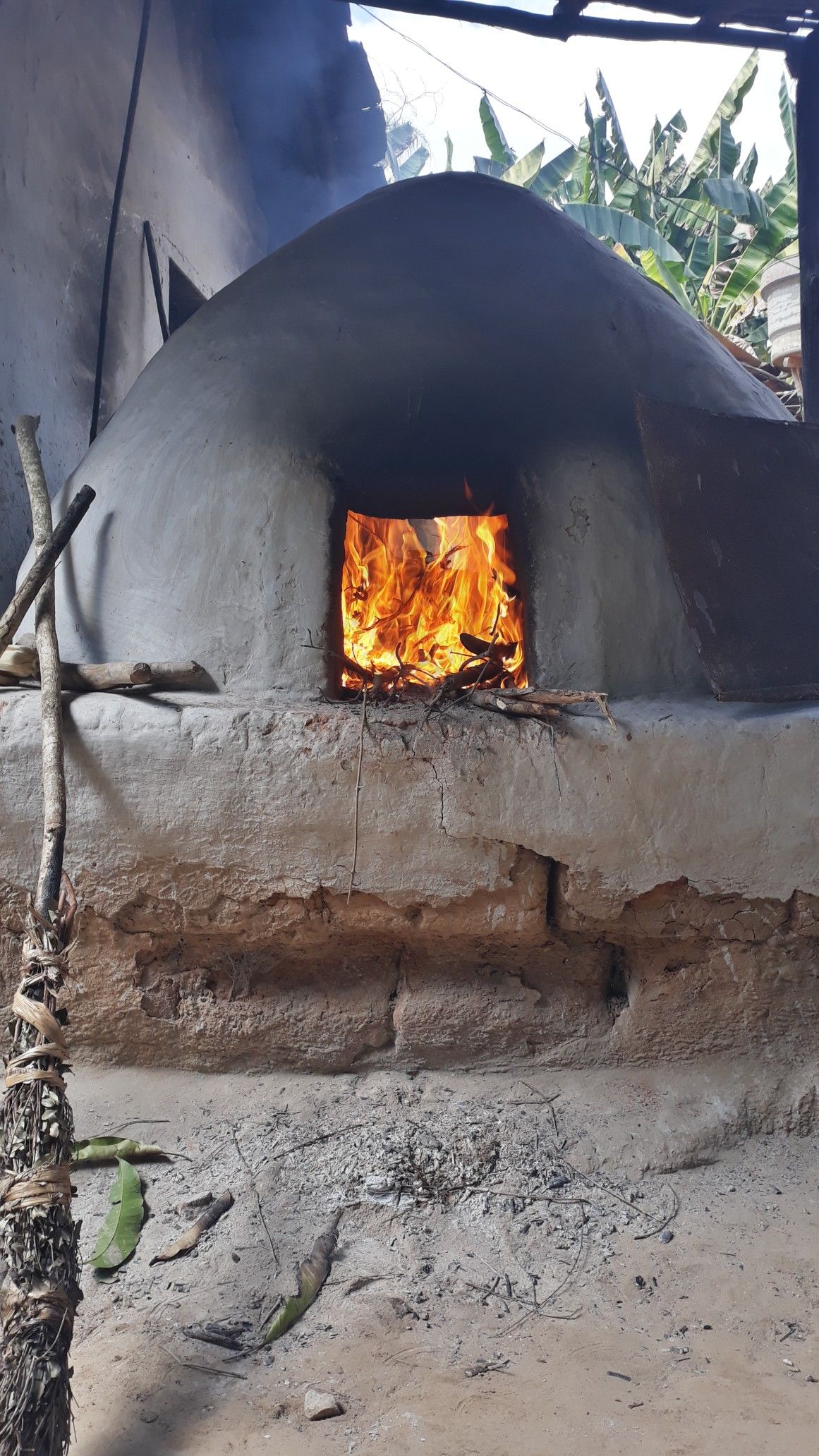
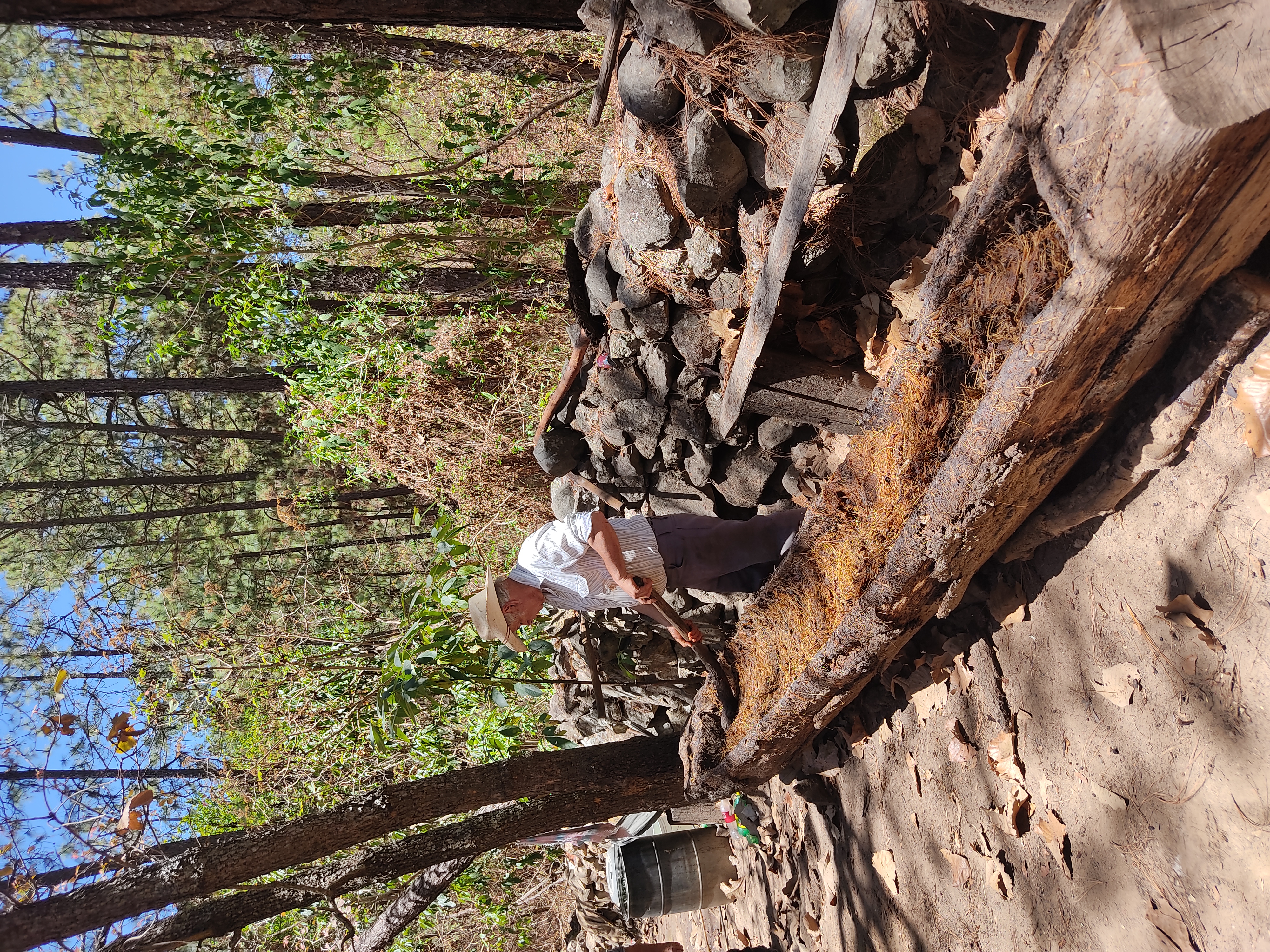
Cooking methods differ by region. In the sierra, piñas are roasted in panadero-style ovens heated with oak wood for 2–3 days. On the coast, conical underground pits heated with volcanic stone cook the agave for 3–4 days — each method imparting distinct aromatic character.
Crushing
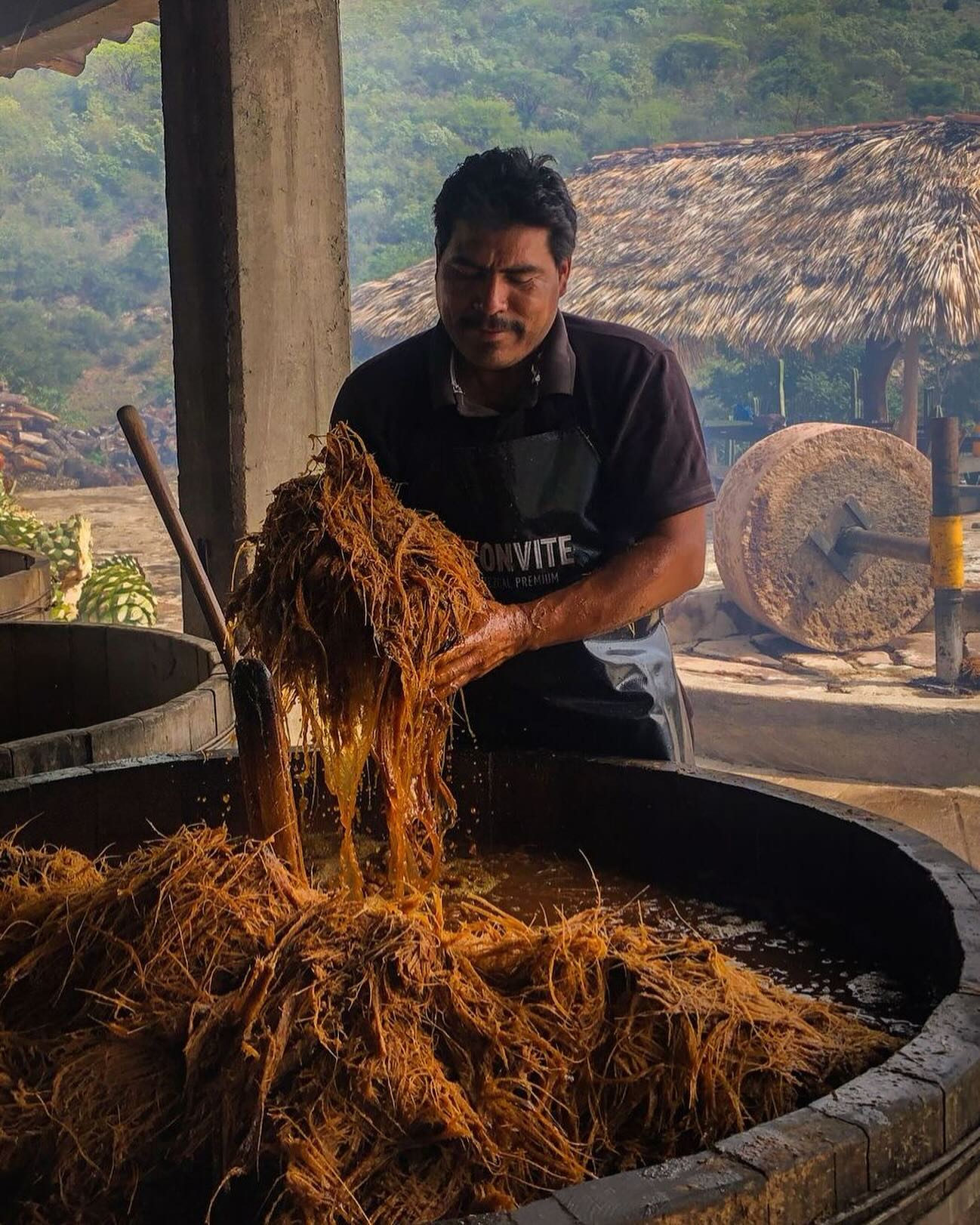
Traditional producers crush roasted agave by hand using a canoa — a hollowed-out log trough — or with a mechanical mill. The tahona is not used in Raicilla production. This labor-intensive process preserves delicate flavor compounds from the cooked fibers.
Fermentation
Fermentation takes place in food-grade plastic containers, stainless steel tanks, wooden vats, or masonry vessels, lasting 5–15 days. This process — often relying on ambient yeast — produces Raicilla's characteristically complex, fruity, and sometimes funky flavor profile.
Distillation
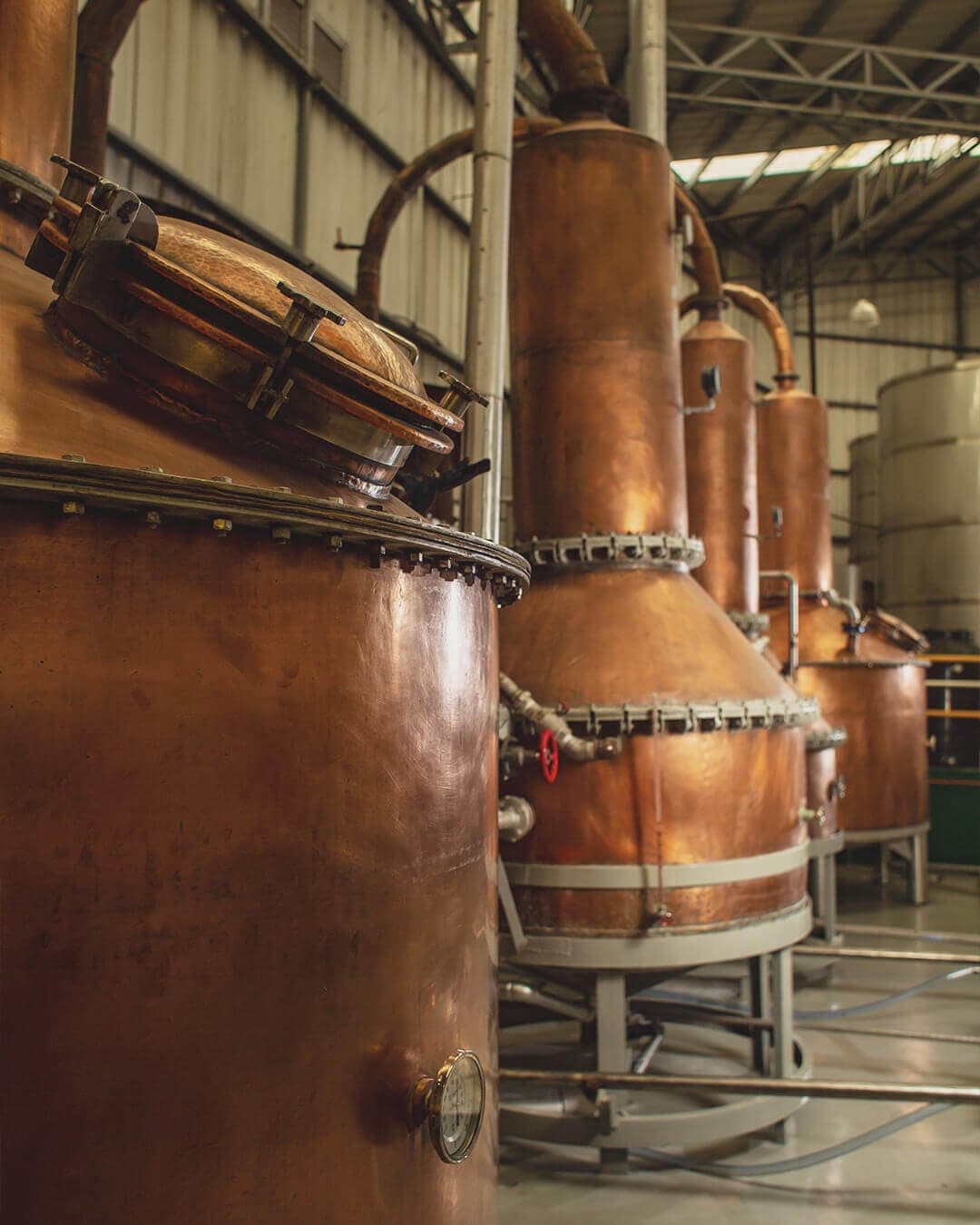
Distillation varies by region. In the sierra, producers use Arábigo stills — predominantly stainless steel, with copper rarely used. On the coast, traditional Filipino-style stills remain the standard. Small batch sizes ensure intimate control over the final spirit.
Regions & Terroir
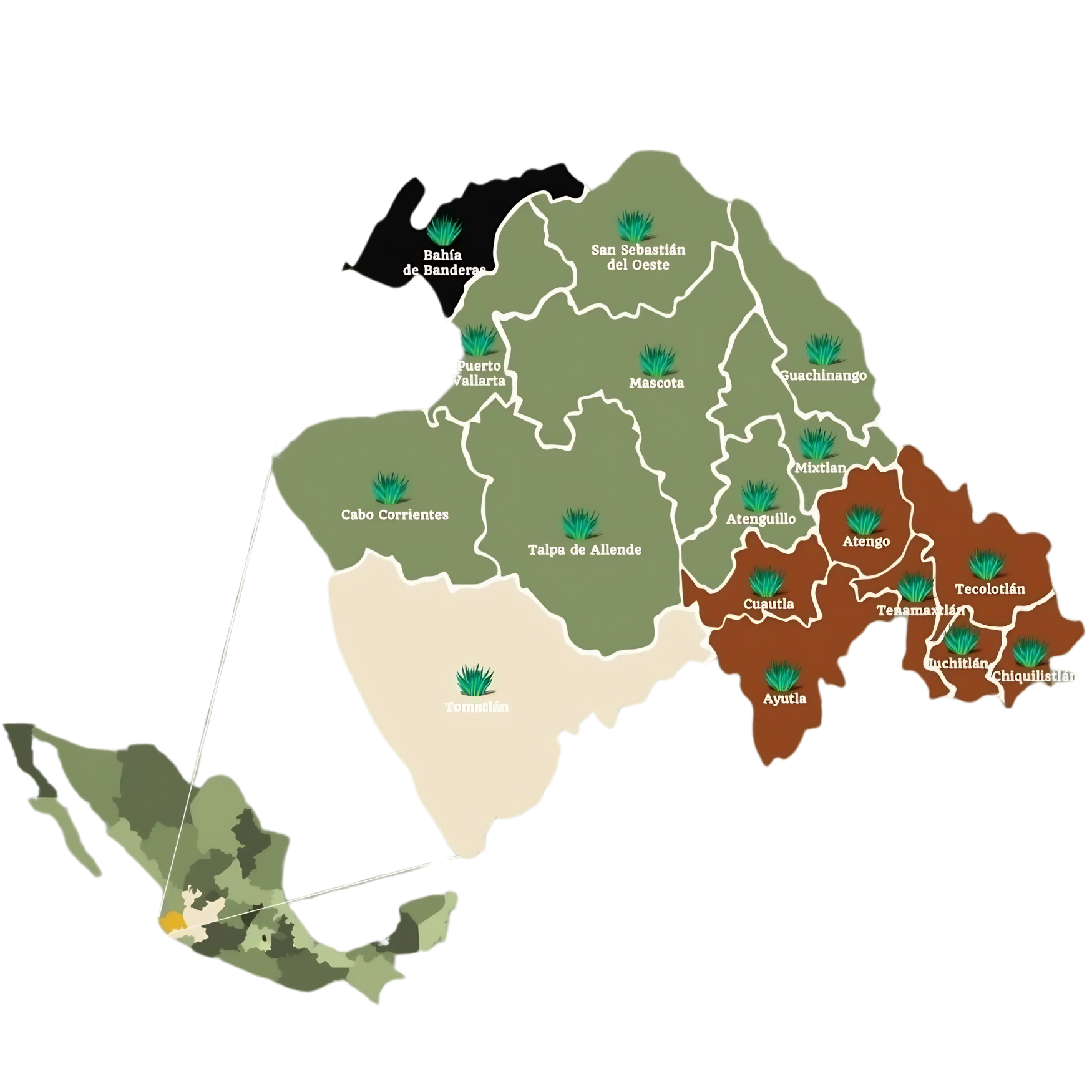
Raicilla's Denomination of Origin, granted in 2019, protects 16 municipalities in Jalisco and 1 in Nayarit (Bahía de Banderas) — though no original taberna exists in Nayarit. The DO is organized into four distinct sub-regions — each producing spirits with dramatically different character driven by altitude, climate, and agave variety.
Sub-Regions
Bahía de Banderas
Coastal lowlands
Costa del Sur
Southern coast
Costa Sierra Occidental
Western mountain-coast
Sierra de Amula
Interior highlands
Cultural Significance
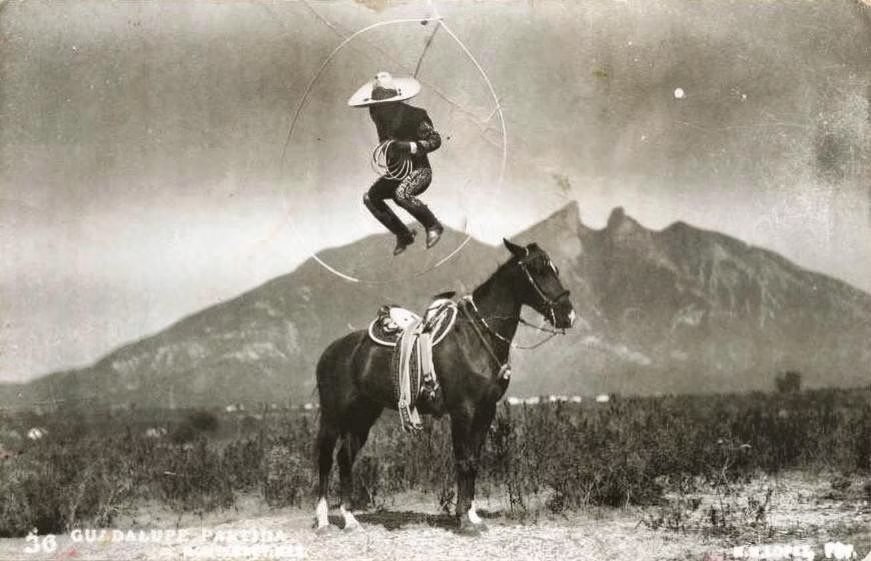
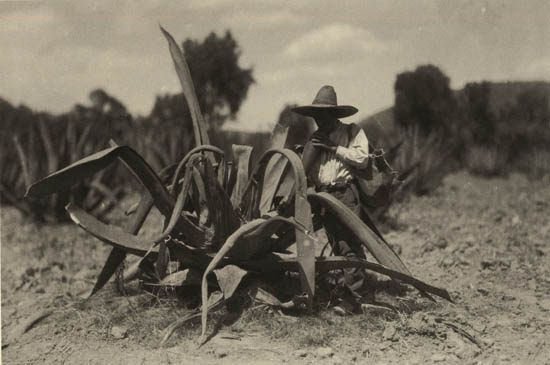
Raicilla's cultural story is one of survival against erasure. For most of its history, it existed in a regulatory blind spot — too different from tequila to claim that name, too similar to mezcal to be entirely distinct, and too remote to attract institutional attention. Producers distilled quietly in mountain villages, selling to local communities and passing their methods through family lineage. There were no labels, no certifications, no export markets — just craft sustained by cultural memory.
The granting of Denomination of Origin status in 2019 was a watershed moment. After decades of advocacy by producers and cultural organizations, raicilla received legal recognition as a distinct spirit category — the newest protected agave denomination in Mexico. This protection ensures that only spirits produced from specific agave varieties, within specific municipalities of Jalisco, using defined methods, can bear the name. For European importers, this DO provides the same guarantee of authenticity and traceability that defines tequila and mezcal.
Raicilla is the newest denomination, but the oldest continuous practice — a spirit that was ancient before it had a name.